
Understanding Turbidity in Our Water
Why You’ll See Turbidity Notices in Fall and Winter
When heavy rains hit, the creek we treat can turn from clear to the color of hot chocolate. That water is loaded with soil, organic material, and debris that no small water plant can completely remove in real time.
What You Might Notice
During heavy rain, the water at your tap may look slightly darker or have a faint yellow or brown tint. This is caused by natural organic material in the creek water that increases during storm events. The water continues to be treated, filtered, and disinfected to meet safety standards, even when it looks different. The color change is aesthetic, not a health concern.
In the past, notices weren’t issued because reporting requirements weren’t always followed. We’re doing things the right way now, which means you’ll receive a public notice whenever turbidity goes above the state limit — even if the water still looks and tastes fine at your tap.
Why We Use Creek Water
The creek is only used when the spring flow isn’t enough to meet customer demand — usually during late summer and fall. When that happens, creek water supplements the spring sources so the system can keep up with daily use. The tradeoff is that creek water is more affected by rain, which increases turbidity and makes treatment more challenging. Reducing overall use during these periods helps limit how much creek water we need to bring online.
What This Means for You
• Transparency, not danger. Notices don’t mean the water is unsafe; they mean we’re following the rules and keeping you informed.
• Storms + high demand = limited options. Because system usage is very high, we can’t shut the plant down for long without running low on storage. That limits how long we can let storm water settle before resuming treatment.
• Your conservation helps. Lower usage during storms gives us more room to pause the plant and ride out the worst of the turbidity.
Why the Notice Arrives Later
The reason these notices arrive well after the event is not due to inaction on our part, but because we are following the state’s required timeline for distributing non-emergency notices. The Oregon Health Authority allows additional time for systems to identify the cause, confirm results, and make corrections before mailing notices. Because this type of situation is not an emergency, the notice is intended to inform you after the issue has been resolved. In the event of an emergency — such as a condition requiring a boil-water advisory — you would be notified immediately.
See the difference:
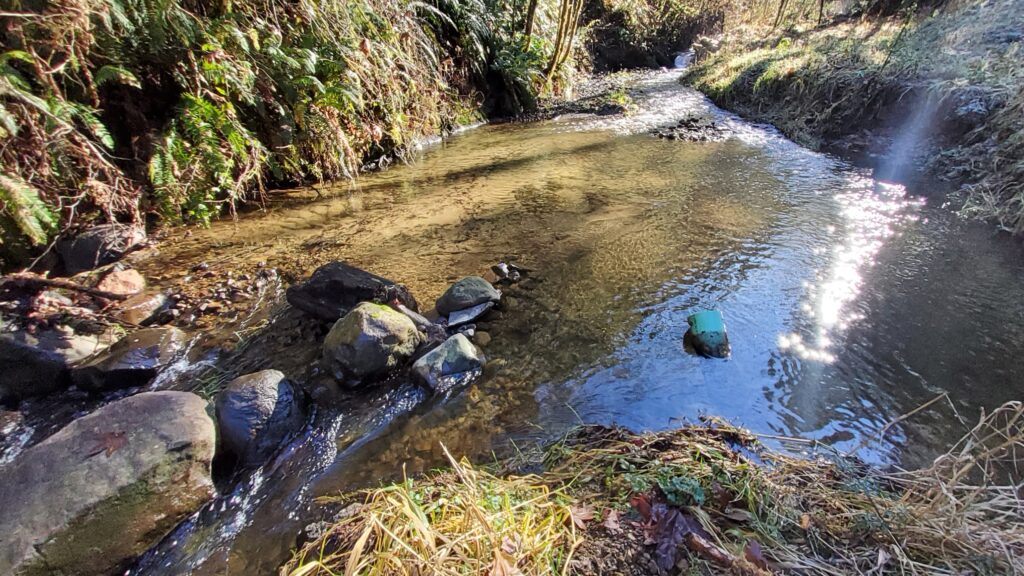
This is what the creek looks like on a calm, clear day.
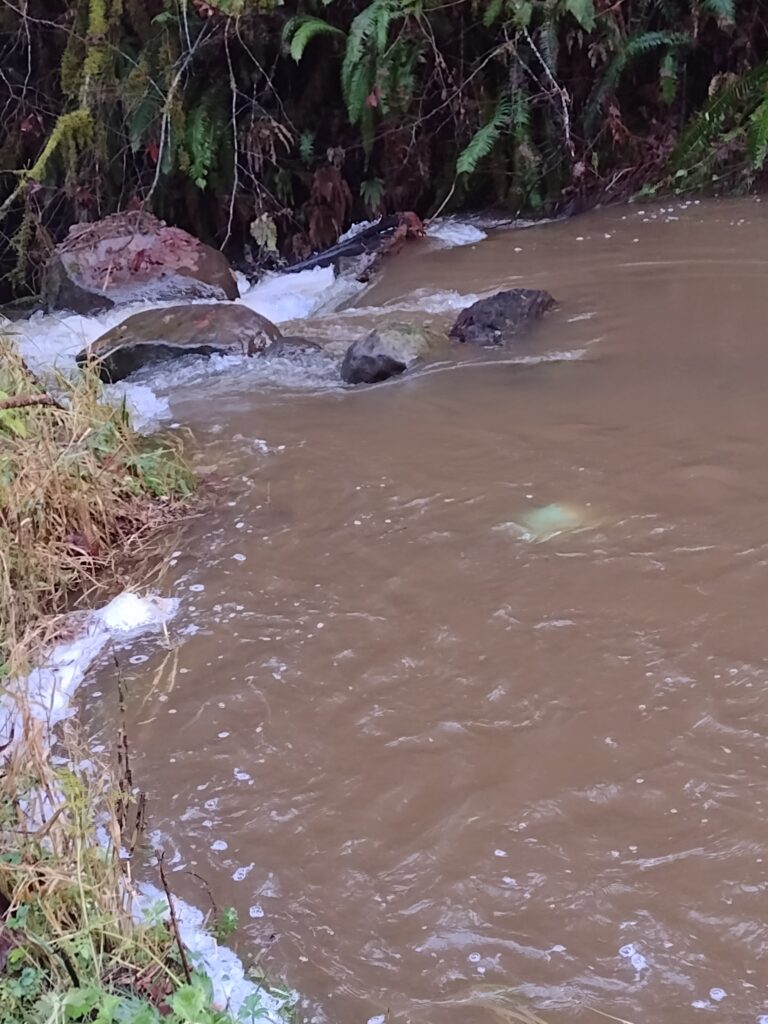
This is what it looks like after a heavy rain.